Friday, September 25, 2026
SUBSCRIBE
22 GLOBAL MEDIA AWARDS
Food For Mzansi
  • News
  • Changemakers
  • Lifestyle
  • Farmer’s Inside Track
  • Food for Thought
No Result
View All Result
  • News
  • Changemakers
  • Lifestyle
  • Farmer’s Inside Track
  • Food for Thought
No Result
View All Result
Food For Mzansi
No Result
View All Result
in News

Regenerative agriculture key to Africa’s food security, say experts

by Staff Reporter
7th September 2024
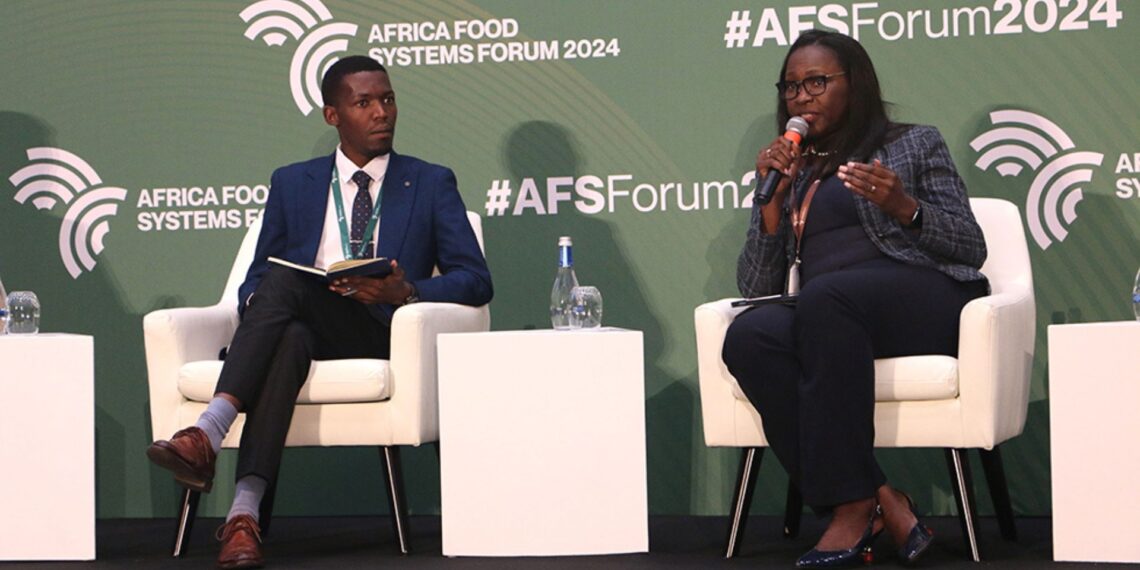
Listening to farmers like Samuel Nsengiyumva (left) is key to understanding their needs within the regenerative agricultural system says Mildred Nadah Pita, Bayer head of public affairs and sustainability in Africa. Photo: Supplied/Food For Mzansi

Listening to farmers like Samuel Nsengiyumva (left) is key to understanding their needs within the regenerative agricultural system says Mildred Nadah Pita, Bayer head of public affairs and sustainability in Africa. Photo: Supplied/Food For Mzansi

Share on FacebookShare on TwitterShare on WhatsApp

Working towards a food-secure future for Africa is achievable by producing more with less while simultaneously rebuilding the land.

This was the central message at the “Regenerative revolution: Building more sustainable solutions for smallholder farmers” panel discussion, held ahead of the official opening of the Africa Food Systems Forum in Kigali, Rwanda.

The event brought together leaders from Bayer, Opportunity International, and the International Potato Centre to discuss new regenerative interventions across the agricultural value chain.

“One of the challenges in the transition to regenerative agriculture is to show smallholder farmers the value of these agronomic practices and how they can improve farm productivity and economic sustainability,” said Mildred Nadah Pita, Bayer’s head of public affairs and sustainability for Africa.

She emphasised the importance of knowledge transfer, access to finance and inputs, and the alignment of policies to support regenerative agriculture as key goals for industry partners and government agencies.

The significance of training and educating smallholder farmers in regenerative agriculture was underscored by Samuel Nsengiymva, a young Rwandan farmer associated with AgriResearch Unguka. Representing youth and smallholder farmers, he noted, “We need both partners and platforms to help in this much-needed knowledge sharing.”

The event earlier this week also sparked discussions among panellists and audience members about the necessity for more collaboration and partnerships in the agricultural value chain to help farmers realise the benefits of investing in regenerative agricultural practices.

“Forging stronger partnerships in the agricultural value chain to serve farmers is key to unlocking the potential of regenerative agriculture in the smallholder market,” stated Jens Hartmann, Bayer Crop Science head of the EMEA region.

He further highlighted that regenerative agriculture is about “producing more while restoring more” and called for a concerted effort to support farmers who are already affected by climate change. Hartmann emphasised the need for intentionality in providing tools, skills training, and knowledge transfer to support farmers.
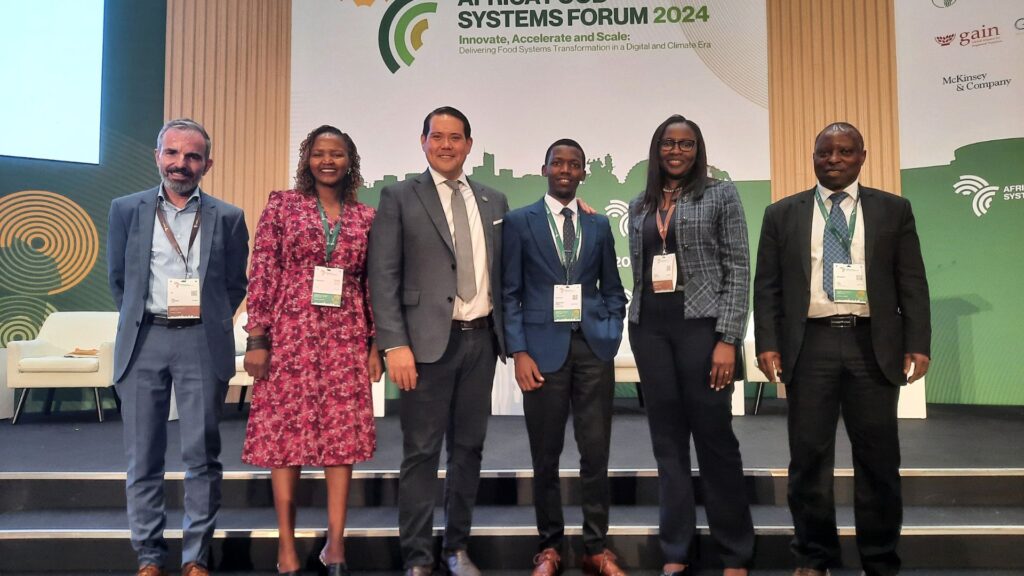
The panellists joining the conversation were Jens Hartmann (Bayer Crop Science head of EMEA region), Joyce Maru (reginal director: International Potato Centre Africa), moderator Tim Strong (Opportunity International head of agriculture finance), a young farmer Samuel Nsengiyumva (AgriResearch Unguka) and senior scientist, Paul Demo (International Potato Center), and Mildred Nadah Pita (Bayer head of public affairs and sustainability in Africa). Photo: Supplied/Food For Mzansi

Why we need regenerative agriculture

Smallholder farmers produce one-third of the world’s food supply, with the number rising to 70-80% in some African countries.

These communities, however, are among the most vulnerable to extreme poverty, climate change, and hunger. There is growing consensus in the scientific community that regenerative and adaptive practices can help combat the climate crisis and mitigate the impact of climate change.

“The importance of focusing specifically on smallholder farmers’ acceptance and understanding of regenerative agricultural systems is crucial in Bayer’s mission of achieving Health for All, Hunger for None,” said Hartmann.

An audience survey conducted during the event revealed a clear demand: farmers want more knowledge about regenerative agriculture and easier access to financing and markets.

The panellists echoed this sentiment, stressing that more work is needed to improve the understanding and adoption of regenerative agricultural principles that keep the land productive, restore and preserve natural resources, and mitigate the effects of climate change.

“We need to align our efforts and definitions, be it in research, knowledge transfer, or farmer enablement. African farmers are already applying many elements of regenerative agriculture that help protect and improve soil health, biodiversity, and water sources. These efforts should be recognised and supported in the value chain and encouraged through agricultural policies,” said Pita.

READ NEXT: Regenerative agriculture: A sustainable solution for soil health
Staff Reporter

Researched and written by our team of writers and editors.

African swine fever: Biosecurity rules every pig farmer must follow
Farmer's Inside Track

African swine fever: Biosecurity rules every pig farmer must follow

by Patricia Tembo
22nd September 2026

African swine fever (ASF) can wipe out a pig farm in days, but daily biosecurity is your strongest shield. Experts...

Read moreDetails

Orange prices plunge 60% amid huge supply surge in SA

22nd September 2026

Seed to shelf: Why home-grown canola matters to SA’s food future

22nd September 2026

Landrace seeds can safeguard SA’s harvests during El Niño

22nd September 2026
EC government invests R1.4m to boost local wool farmers

EC government invests R1.4m to boost local wool farmers

22nd September 2026

Why traditional farming knowledge must be saved for Mzansi

Mzansi’s first Cosmic Crisp apple harvest hits Checkers shelves

Grazing shortages? Here is how Voermol protects livestock wealth

How SA farmers can protect profits amid surging input costs

African swine fever: Biosecurity rules every pig farmer must follow

Join Food For Mzansi's WhatsApp channel for the latest updates!

JOIN NOW!
Next Post
Dr Chris Silali, founder and CEO of GenePlus Global Limited, proudly receives the Best Agri Tech Startup Award at the AfricArena Nairobi Summit, recognising their groundbreaking work in revolutionizing agricultural practices in Africa. Photo: Supplied/Ian Njoroge/EsoundsGroup:

Climate change takes centre stage at AfricArena Nairobi Summit

THE NEW FACE OF SOUTH AFRICAN AGRICULTURE

With 21 global awards in the first six years of its existence, Food For Mzansi is much more than an agriculture publication. It is a movement, unashamedly saluting the unsung heroes of South African agriculture. We believe in the power of agriculture to promote nation building and social cohesion by telling stories that are often overlooked by broader society.

Last-minute tickets now available for SA Future of Food Conference

Grandmother’s lessons inspire Irene Dioka’s indigenous food brand

Why traditional farming knowledge must be saved for Mzansi

Strong demand sees Land Bank pause blended finance scheme

How Africa’s poultry feed crisis could hatch youth enterprises

How SA farmers can protect profits amid surging input costs

  • Awards & Global Impact
  • Our Story
  • Contact Us
  • Cookie Policy
  • Privacy Policy
  • Copyright

Contact us
Office: +27 21 879 1824
News: info@foodformzansi.co.za
Advertising: sales@foodformzansi.co.za

Contact us
Office: +27 21 879 1824
News: info@foodformzansi.co.za
Advertising: sales@foodformzansi.co.za

  • Awards & Global Impact
  • Our Story
  • Contact Us
  • Cookie Policy
  • Privacy Policy
  • Copyright

Chat Options

I'm Lerato, your AI assistant!
No Result
View All Result
  • News
  • Changemakers
  • Lifestyle
  • Farmer’s Inside Track
  • Food for Thought

Copyright © 2024 Food for Mzansi

This website uses cookies. By continuing to use this website you are giving consent to cookies being used. Visit our Privacy and Cookie Policy.